By Diosh — Founder, AHAeCommerce | eCommerce decision intelligence for $50K–$5M GMV operators
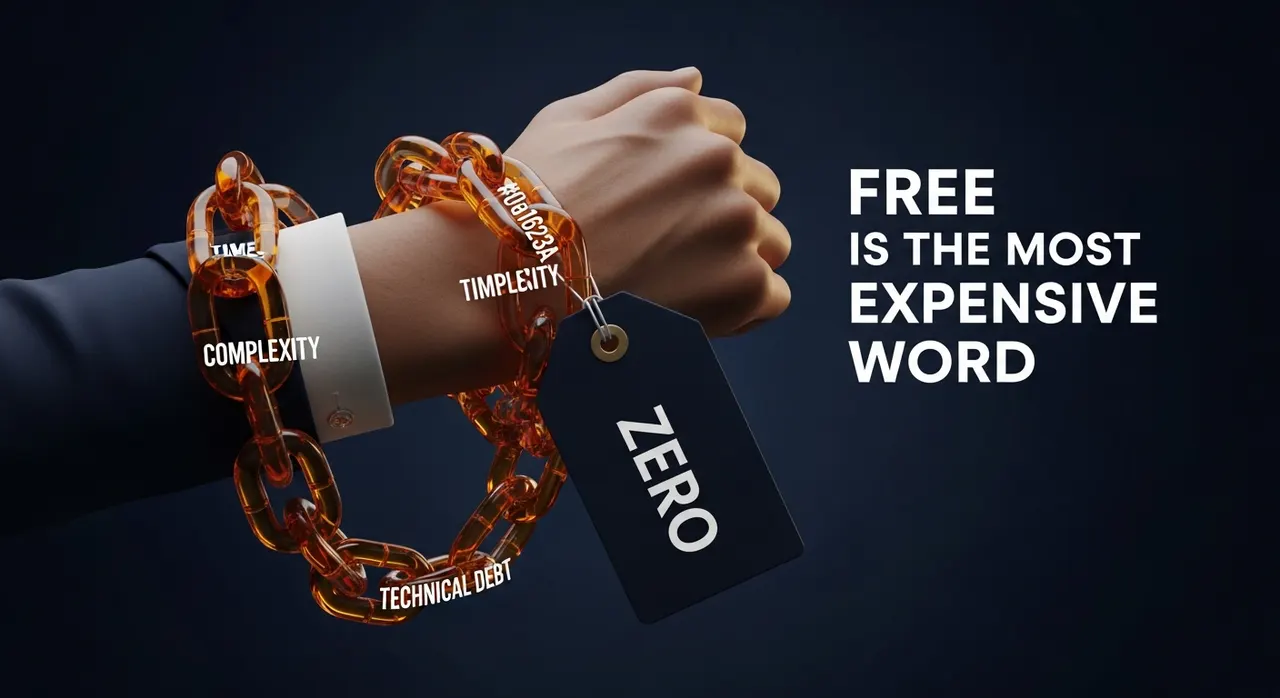
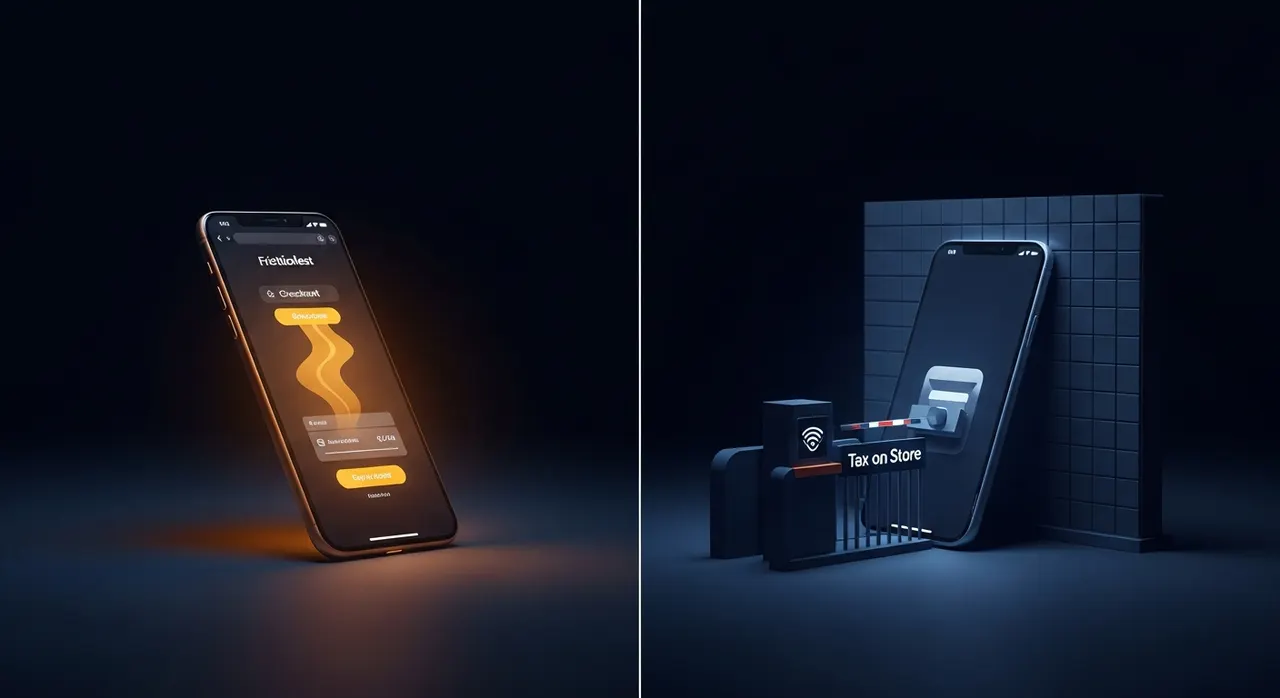
A native mobile app retains your best customers slightly better and taxes every new one. That is the whole trade-off in one sentence. The retention lift is real — push notifications and saved carts genuinely lift repeat-order rate — but it is small, and it only reaches the customers who were coming back anyway. The cost is large and lands on acquisition: a 15-30% app-store commission on in-app sales plus the install-friction conversion loss on first-time buyers. This is a trade-off piece for operators between $5M and $30M GMV who are being pitched a branded app as a retention lever and want the frequency math before they sign a build contract or a $1,000/month SaaS subscription.
The Pitch You're Hearing, And What It Leaves Out
The pitch from app builders is clean: "App users have 3-4x higher purchase frequency and 2x the conversion rate of mobile web." Those numbers are real in the platforms' own benchmark decks. They are also a selection artifact. The customers who install your app are the customers who already love you — your top 5-10% by lifetime value. They were going to buy again on web anyway. The app does not create their loyalty; it harvests it and re-attributes the credit to itself.
This is the same measurement trap that inflates email "ROI" and retargeting "conversions." You are looking at the behavior of a hand-picked cohort and crediting the channel for the cohort. Before you accept any app benchmark, run the test in conversion rate as a vanity metric: is this a real lift, or a number that moves because the denominator changed? With apps, the denominator changed dramatically — you went from "everyone who lands on your site" to "the superfans who downloaded 80MB to their home screen."
The honest framing is comparative, not absolute. The question is never "do app users buy more than web users" — they always will, by construction. The question is "does the app move the same customer from N to N+1 orders, net of what it costs to acquire and serve them." For most catalogs, the answer is no. For a specific kind of catalog, the answer is a confident yes. The dividing line is purchase frequency.
The Hidden Cost: A Commission On Every In-App Sale
Here is the line item the app builder's slide deck omits. Apple's App Store Review Guidelines require that digital goods and, for many merchant categories, in-app transactions route through Apple's in-app purchase system, which takes a commission — 30% for most developers, 15% under the Small Business Program for those under roughly $1M in annual app revenue (Apple Developer). Google Play applies a comparable service fee structure, 15-30% depending on volume and category (Google Play Help).
Physical-goods sellers have historically been exempt from in-app purchase commission — you can take payment for a shipped product through your own processor. But the regulatory and policy ground here moves, exemptions narrow, and any app strategy that depends on a platform's current carve-out is building on rented land. That dependency belongs in the same category as the platform-lock liabilities in the real cost of eCommerce tech debt: a future policy change can re-price your entire channel without your consent.
Even setting commission aside, the app has a hard floor of cost the web does not. A branded app on Tapcart-class tooling runs $1,000-$2,500/month in subscription before you count the engineering hours to maintain two more surfaces — iOS and Android — through every OS update, every checkout change, every promotion. A $12M GMV brand putting 25% of revenue through an app pays the SaaS fee, the maintenance drag, and the opportunity cost of the team not improving the site everyone else shops on. Call it $30,000-$60,000 a year all-in before a single commission point — an estimate, but a conservative one.
Install Friction: The Acquisition Tax Nobody Models
The app's cost is not only the commission and the SaaS fee. The larger, quieter cost is the conversion you lose at the front door. Asking a first-time visitor to install an app before they can buy adds a step — open the store, accept the download, wait, grant permissions, find the product again — and every added step sheds users.
Mobile checkout is already where revenue leaks. Baymard Institute's mobile commerce UX research documents how each added field, redirect, and interruption compounds abandonment on small screens (Baymard Institute). An install gate is the most expensive interruption you can add: it is a full context-switch out of your store and into a platform store, where the user may get distracted, hit a sign-in wall, or abandon the download. For a cold visitor from a paid ad — the most expensive traffic you buy — routing them through an install before purchase is setting money on fire.
This is why the app's economics are upside-down relative to where most $5M-$30M brands actually need help. Adobe's Digital Economy Index has tracked mobile's rising share of eCommerce spend, and the overwhelming majority of that spend happens on the mobile web, not in native apps (Adobe). Your acquisition engine runs on mobile web whether you build an app or not. The app does nothing for the cold visitor and actively penalizes the ones you force into it. It only ever touches the warm, returning customer — which brings us to the one variable that decides the whole question.
The One Variable That Decides It: Purchase Frequency
The app pays back when the same customer buys often enough that push notifications and a saved cart change their behavior repeatedly across a year. Below a frequency threshold, the install friction destroys more first-purchase conversion than the app ever recovers in repeat orders. Above it, the retention mechanics compound.
Under 4 Purchases A Year: Mobile Web Wins
If your customers buy three times a year or fewer — furniture, considered apparel, electronics, most home goods — an app cannot earn back its install friction. A push notification to someone who buys twice a year is noise 363 days out of 365. The saved cart is stale before they return. You paid the install tax on acquisition and got a near-zero retention return because the purchase occasion is too rare for any nudge to matter. Put that build budget into mobile web speed instead. A second shaved off your largest-contentful-paint moves more revenue for a low-frequency catalog than any app feature, because it works on every visitor, warm and cold.
Six-Plus Purchases A Year: The App Can Pay Back
Beauty replenishment, supplements, coffee, pet food, vape and nicotine alternatives, fast-fashion drops — categories where a loyal customer buys six, ten, twenty times a year — are where push and saved-cart mechanics compound. A "you're about to run out" or "the drop is live" push to a customer who orders monthly is a relevant, revenue-driving event, not noise. Here the app's retention lift is large enough to clear the commission and the SaaS floor, provided you already have a loyal base. No app rescues weak retention; it amplifies retention that already exists.
The Loyal-Base Prerequisite
Frequency is necessary but not sufficient. The app multiplies an existing repeat-purchase habit — it does not manufacture one. Before any app decision, run the diagnosis in retention vs. acquisition economics: what share of revenue already comes from repeat buyers, and is that cohort large enough that a single-digit retention lift on it exceeds your all-in app cost? If your repeat-customer base is thin, fix retention on web first. The app is leverage, and leverage on a small number is still a small number.
Running The Trade-Off On Your Own Numbers
You do not need an agency to model this. Pull four figures and you can decide in an afternoon. Natural purchase frequency: orders per active customer per year. Repeat-revenue share: percentage of GMV from second-and-later orders. Mobile-web acquisition conversion: your current mobile checkout completion rate. And your true per-customer economics — not a blended average, but the contribution margin per repeat order, which you can build from the customer LTV reality.
Now the test. If frequency is under 4 and repeat-revenue share is modest, stop — invest the app budget in mobile web speed and checkout reduction. If frequency clears 6 and a meaningful slice of revenue already comes from repeat buyers, model the app as a retention surface for that cohort only: estimate the incremental orders the push and saved cart can drive against your $30,000-$60,000 all-in floor plus commission exposure. The break-even is unforgiving, and it should be — a channel that taxes acquisition has to earn its place on retention alone.
The deeper pattern is architectural. An app is another surface to build, staff, and keep in sync — the same coupling cost that makes operators ask whether they need a re-platform at all, the question worked through in headless commerce: who actually needs it. For most $5M-$30M brands, the answer to both is the same: the surface you already have, made faster, beats the surface you were sold. Build the app only when your own frequency number tells you to — not because a bigger brand has one.