By Diosh — Founder, AHAeCommerce | eCommerce decision intelligence for $50K–$5M GMV operators
A brand holding $1.2 million in inventory through a year of 8% supplier cost inflation will report a gross margin 4.2 points lower under Weighted Average Cost than under FIFO — on the same physical sales, the same revenue, and the same actual cash spent. That four-point gap is not a rounding artifact. It is the difference between hitting your bank covenant and tripping it, between the tax bill you planned for and a six-figure surprise in April, between unit economics that look strong and unit economics that look broken.
Inventory valuation method is treated as a bookkeeping choice. It is actually a structural decision about how cost inflation flows through your P&L, when it hits your tax return, and how your business performs against external financial benchmarks. Most operators choose the method their accountant defaults to and never revisit it. The choice deserves more attention than that.
The Default Assumption (and Why It Fails)
The standard treatment in eCommerce founder content is: "FIFO is most common, LIFO is restricted, WAC is simplest — pick the one your accountant likes." This is technically true and operationally inadequate. The three methods produce different COGS, different ending inventory values, different gross margins, and different taxable income on identical physical inventory flows. The differences compound during periods of cost inflation, which is precisely when eCommerce businesses face the most operational stress and have the least margin for surprise tax outcomes.
GAAP allows FIFO and WAC. LIFO is permitted in the US under IRS rules but prohibited under IFRS — meaning brands operating internationally or pursuing international financing options should not adopt LIFO regardless of US tax advantages (IRS Publication 538, Accounting Periods and Methods). The choice is constrained by jurisdiction and reporting framework before it is constrained by preference.
The relevant question is not "which method is most common." It is "which method most accurately matches the physical flow of inventory through my business while producing the financial reporting I need for tax, financing, and operational decision-making."
What the Decision Actually Hinges On
How Cost Inflation Flows Through Each Method
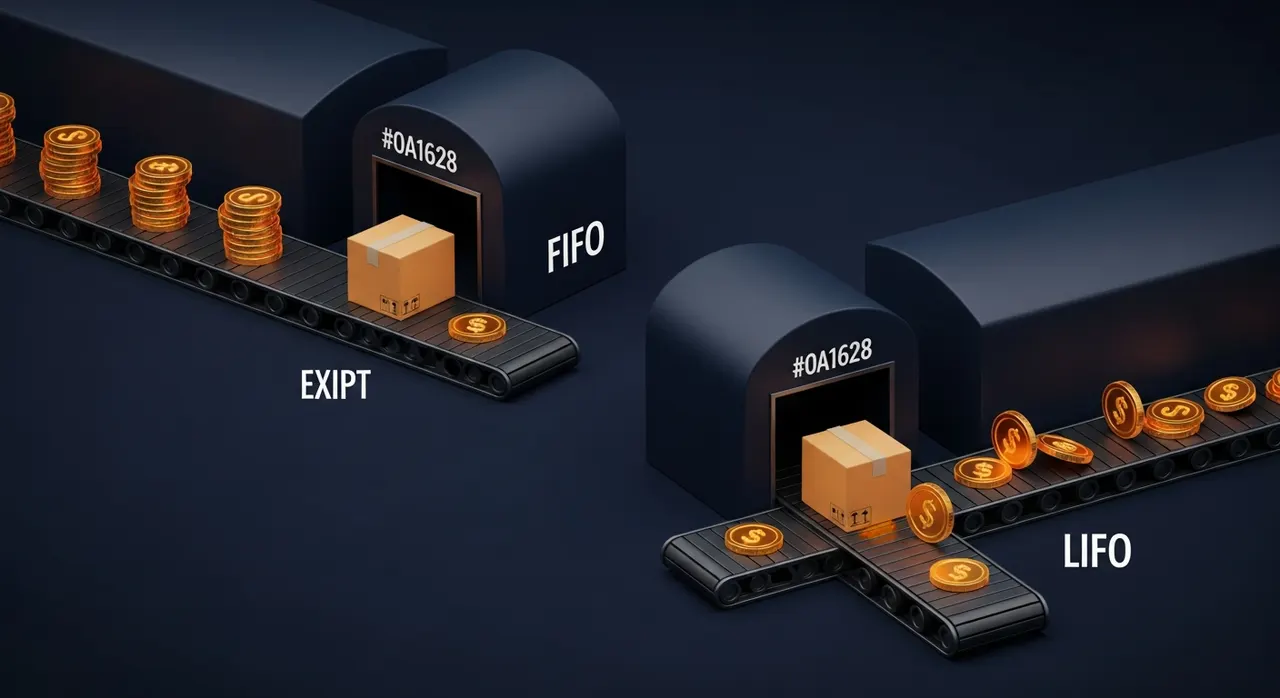
Under FIFO (First In, First Out), the oldest cost layer flows to COGS first. During cost inflation, this means older — cheaper — units are expensed first, producing lower COGS and higher reported gross margin. The newer, higher-cost units sit in ending inventory, inflating the balance sheet value. The result: higher reported profit, higher tax liability, and a balance sheet that overstates the current replacement cost of inventory.
Under WAC (Weighted Average Cost), every sale draws against a blended unit cost recalculated as new inventory arrives. During cost inflation, this smooths the impact — COGS rises gradually as the average cost catches up to current prices. Reported margin compresses more slowly than under LIFO but more aggressively than under FIFO. Ending inventory is valued at the blended average, which understates current replacement cost slightly.
Under LIFO (Last In, First Out, where permitted), the newest cost layer flows to COGS first. During cost inflation, this means the most expensive units are expensed first, producing higher COGS and lower reported gross margin. The older, cheaper units sit in ending inventory, understating its current value. The result: lower reported profit, lower tax liability, and a balance sheet that increasingly diverges from physical reality as the LIFO reserve grows.
The Tax Liability Difference (Direct Cash Impact)
Tax is paid on reported profit. During cost inflation, FIFO produces the highest reported profit, LIFO produces the lowest, and WAC sits between them. The tax cash difference can be material at $1M+ inventory levels. A brand with $1.2M inventory, 4x annual turns, and 8% cost inflation can see a $40,000–$80,000 swing in annual taxable income depending on method choice. At a 21% federal corporate rate plus state, the cash tax difference runs $11,000–$22,000 in a single year — and compounds over time as the LIFO reserve (under LIFO) or the inventory writedown obligation (under FIFO/WAC during deflation) builds.
This is the single most underweighted factor in the decision. Operators treat the method choice as a reporting question and miss the cash impact, which is direct, recurring, and proportional to inventory size and cost volatility.
The Bank Covenant and Financing Implication
Brands with bank lines, factoring agreements, or asset-based loans have covenants tied to inventory value or gross margin reporting. A method that reports higher inventory value (FIFO during inflation) supports larger borrowing bases. A method that reports lower gross margin (LIFO during inflation) can trigger covenant violations on debt service coverage ratios. Switching methods after a financing arrangement is in place requires lender notification and often consent.
For brands relying on factoring or cash flow forecasting against inventory collateral, the financing implication often dominates the tax implication. The most "efficient" method for tax purposes may not be the method that maintains your borrowing capacity, and the reverse is also true.
The Cost Reality
The following table shows reported COGS, gross margin, and ending inventory under each method for a brand with $2,000,000 annual revenue, 35% baseline gross margin at start-of-year supplier costs, 8% supplier cost inflation through the year, and inventory turns of 4x.
| Metric | FIFO | WAC | LIFO | |---|---|---|---| | Revenue | $2,000,000 | $2,000,000 | $2,000,000 | | COGS (calculated) | $1,247,000 | $1,295,000 | $1,343,000 | | Reported gross profit | $753,000 | $705,000 | $657,000 | | Reported gross margin | 37.6% | 35.2% | 32.9% | | Ending inventory value | $546,000 | $498,000 | $450,000 | | Taxable income impact | +$48K vs WAC | baseline | −$48K vs WAC | | Federal tax differential (21%) | +$10,080 | — | −$10,080 | | LIFO reserve change | n/a | n/a | +$96K (growing) |
The 4.7-point gross margin gap between FIFO and LIFO on the same physical business is the headline number. The $20,000 annual tax differential between FIFO and LIFO is the recurring cash impact. The growing LIFO reserve is the cumulative liability that builds inside a LIFO election — and that has to be unwound (and taxed) if the brand ever switches methods or is acquired.
These numbers shift directionally during cost deflation. In deflationary periods, FIFO produces lower margin and lower tax; LIFO produces higher margin and higher tax. The methods don't have a permanent winner — they have a behavioral pattern that depends on the cost trajectory of your category.
The Trade-Off Map
FIFO: The Default for Most US eCommerce Brands
FIFO is the default for most US eCommerce operators and is required under IFRS for brands operating in IFRS jurisdictions or pursuing international financing. The physical flow assumption — oldest inventory sold first — matches reality for most product categories, particularly perishables and fashion. Reported gross margin runs higher during inflation, which supports financing decisions and presents better to outside investors.
The cost is tax efficiency. During inflation, FIFO produces the highest tax liability of the three methods. For a profitable brand at $1M+ inventory with 6–10% supplier inflation, this can be $15,000–$40,000/year of additional federal and state tax compared to LIFO. The brand pays this tax in exchange for cleaner financial reporting, larger borrowing capacity, and easier international compatibility.
WAC: The Pragmatic Middle, Best for High-SKU Counts
Weighted Average Cost is the operational choice for brands with hundreds of SKUs or large variance in supplier pricing for similar products. The bookkeeping load is dramatically lower than FIFO at high SKU counts — instead of tracking individual cost layers, the system maintains a single average cost per SKU that updates with each receipt. For brands running on cloud accounting (Xero, QuickBooks Online, NetSuite), WAC is often the only method the system supports without significant customization.
The trade-off is reporting smoothing. Margin compresses gradually under cost inflation, which can mask the actual margin trend until the average has fully caught up to current supplier costs. This delays the operational signal that suppliers need to be renegotiated or prices need to rise.
LIFO: Niche Tax-Optimized Choice for US-Only Brands
LIFO is a deliberate tax-deferral strategy. It is only available in the US (prohibited under IFRS) and requires the brand to commit to the method long-term — switching methods later triggers recapture of the accumulated LIFO reserve as ordinary income, which can be a large taxable event. The benefit is recurring tax cash flow savings during inflation. The cost is reported margin compression (which can affect bank covenants), reduced inventory asset value on the balance sheet (which can affect borrowing base), and complete incompatibility with future international expansion or international financing.
LIFO makes sense for: US-only brands, durable inventory categories (parts, hardware, non-perishables), sustained inflation environments, and operators who plan to hold the business long-term rather than sell. It does not make sense for: international brands, perishable inventory, deflationary categories, brands seeking outside investment, or brands that may be acquired within 5 years.
Specific Identification: When Each Unit Has a Unique Cost
Specific identification — tracking each unit's cost individually — is required for high-value, low-volume inventory (jewelry, art, custom-fabricated goods) and optional for everyone else. The administrative load makes it impractical for most eCommerce inventory above 100 SKUs, but it produces the most accurate matching of cost to revenue when feasible. For high-AOV brands with $200+ unit cost, this is worth evaluating against WAC.
When to Act (Specific Triggers)
Trigger 1: Reassess at $500K+ Inventory Value
If your inventory carrying value exceeds $500K and you have not deliberately chosen your valuation method (rather than accepting the default from your accounting software), this is the trigger to model the alternative methods against your specific supplier cost trajectory. The work is 4–8 hours of analysis with your bookkeeper and produces a clear comparison of reported margin, tax liability, and ending inventory value under each option.
Trigger 2: Re-evaluate When Supplier Costs Move 5%+
Sustained supplier cost movement of 5% or more in either direction over 2–3 quarters changes the relative attractiveness of each method. Brands that locked in FIFO during a low-inflation environment should reassess during sustained inflation; brands on LIFO during inflation should reassess if the environment shifts to deflation. The IRS allows method changes with Form 3115; the change is meaningful work but not prohibitive for a brand that has clearly modeled the implications.
Trigger 3: Audit Before Financing or Acquisition
Before signing any debt facility, factoring agreement, or asset-based loan — and certainly before any acquisition process — audit your inventory valuation method choice against the financing requirements. Switching methods after the financing is documented is operationally awkward and can require lender consent. Before the documents are signed, the choice can be made on operational grounds.
Trigger 4: Document the Change Carefully
Any method change requires IRS notification (Form 3115 in the US) and produces a one-time taxable adjustment. The administrative load is moderate — 6–12 hours of CPA time at $200–$350/hour, plus the bookkeeping work to recalculate prior-period inventory under the new method. The total cost of changing methods is $3,000–$8,000 for a brand with clean records; meaningful but not prohibitive if the change saves more than that annually in tax.
What Operators Get Wrong Most Often
Mistake 1: Defaulting to Whatever the Accounting Software Set
The most common failure is accepting the inventory valuation method that the accounting software defaulted to at setup, without modeling the alternative. QuickBooks Online defaults to FIFO; Xero defaults to FIFO; NetSuite supports both FIFO and WAC. These defaults are reasonable choices for most brands at most stages — but "reasonable default" is not the same as "right for this business." The cost of not actively choosing is invisible at $50K inventory and material at $500K+.
Mistake 2: Confusing Physical Flow With Accounting Flow
The IRS does not require the accounting method to match the physical flow of inventory. A brand can use LIFO accounting while physically selling oldest inventory first (which most do). This is a frequent source of founder confusion — they assume FIFO is required because their warehouse practice is first-in-first-out. The accounting method is a financial reporting choice, not an inventory rotation policy. The two are independent.
Mistake 3: Ignoring LIFO Reserve as Hidden Tax Liability
Brands on LIFO that have built a $200K+ LIFO reserve over multiple years often forget that this reserve is a deferred tax liability — if the brand is ever acquired, the reserve is unwound and taxed at the acquirer's rates, reducing acquisition proceeds. Founders preparing for sale should model the LIFO reserve implication 12–18 months before the transaction; in some cases the right move is to switch to FIFO ahead of the sale and pay the recapture tax in a year of lower personal income, rather than during the sale year. This is an example of why the contribution margin vs gross margin distinction matters — the reported gross margin from LIFO is not the cash margin available to the business.
The Verdict
Inventory valuation method is a structural financial decision, not an accounting preference. FIFO maximizes reported margin and supports financing; LIFO minimizes tax during inflation but limits flexibility; WAC is the operational choice for high-SKU brands. The right answer depends on jurisdiction, inventory value, supplier cost trajectory, financing structure, and whether the brand plans to operate internationally or be acquired.
This week: Pull your current inventory value, identify the method your accounting system is using, and ask your CPA to model the same trailing 12 months under the other GAAP-allowed methods. If you are at $500K+ inventory and the gap between methods exceeds $10K in tax or 2 points in reported margin, the analysis to formally evaluate a method change pays back in a single year.